Mollica: The Handwritten Font with Soft, Bold Character
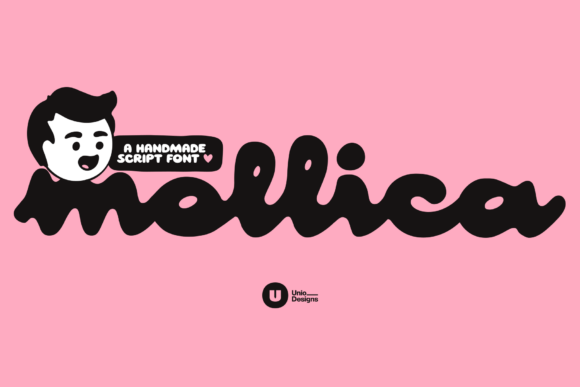
There’s something undeniably inviting about a typeface that feels like it was just written by hand. Mollica is that kind of font—a premium handwritten font designed with bold, casual strokes and a natural, organic flow. It doesn’t try to mimic perfect calligraphy; instead, it embraces the slight imperfections and sweeping brushwork that give hand-lettered text its warmth and authenticity. The name itself hints at this softness: derived from the Latin “mollīca,” meaning the tender crumb of bread, Mollica conveys a sense of comfort and approachability in every curve.
Where Mollica Truly Shines
As a display font, Mollica is built for projects where personality and charm are key. It’s not the typeface you’d choose for long body copy or a corporate annual report. Instead, think of it as the perfect accent for designs that need a human touch. Consider using Mollica for:
- Branding and logo design for boutique businesses, artisan products, or creative studios where a handmade feel builds trust.
- Editorial design in magazines, blog headers, or book covers where you want to draw the eye with a friendly, approachable headline.
- Packaging design for food labels, cosmetic products, or gift tags where a whimsical, personal note matters.
- Wedding invitations, greeting cards, and event stationery that aim for heartfelt elegance without stiffness.
- Social media graphics and digital content where a creative font can stop the scroll and boost engagement.
- Inspirational quotes, posters, and illustrative works that benefit from an informal, uplifting character.
In these contexts, Mollica doesn’t just deliver text—it adds a layer of emotional resonance. A bakery’s logo set in Mollica feels more authentic. A motivational quote on Instagram becomes more relatable. The font acts as a design asset that shapes perception before the words are even read.
Practical Considerations for Using Mollica
Choosing the right typeface is about more than just aesthetics; it’s about fit and function. Before integrating Mollica into your next project, ask yourself a few practical questions.
Is Mollica the Right Fit for Your Project?
Evaluate the tone of your project. Mollica works best for designs that are playful, warm, sincere, or whimsical. It’s less suited for projects requiring a formal, authoritative, or minimalist brand identity. For a tech startup or a law firm, a clean sans serif font would likely be more appropriate. For a children’s book illustrator or a handmade soap brand, Mollica could be ideal.
Pairing and Hierarchy
A font pairing strategy is essential when using a strong script font like Mollica. Because of its distinctive character, it’s best used for headlines, titles, or short phrases. Pair it with a highly legible serif font or a neutral sans serif font for body text to ensure readability and create clear visual hierarchy. For example, use Mollica for a product name on a label, and set the description in a simple, open sans serif like Lato or Open Sans.
Leveraging Its Features
Mollica comes equipped with thoughtful features that enhance its utility. Its rich set of ligatures allows for more natural, connected letterforms, preventing awkward joins in certain letter combinations. The included oblique version offers a sophisticated italic alternative, useful for adding emphasis or creating subtle variation within a design system. Always test these features in your specific layout to see how they improve the flow of your text.
Readability and Application
While Mollica is excellent for display purposes, its bold strokes and organic shapes can reduce legibility at very small sizes or in long paragraphs. Use it for short, impactful text. For web design, ensure it’s used in sizes where its character is clear—typically 24px or larger for headlines. In print, test a proof to see how the ink interacts with the paper, especially with its brush-like texture.
Licensing and Versatility
As a commercial font, it’s crucial to verify that your license covers your intended use, whether for digital marketing materials, physical products, or merchandise. A quality premium font like Mollica is a versatile asset. Its support for multiple languages makes it a practical choice for creators working on international projects or with diverse audiences.
Ultimately, Mollica is more than just a handwritten font; it’s a tool for injecting genuine warmth into modern design. It bridges the gap between the spontaneity of hand lettering and the consistency required for professional work. When used thoughtfully, it can elevate a design from merely informative to truly memorable, creating a connection that feels both personal and polished.